
Volt Capabilities
Insights on building, scaling, and enforcing real-time decisions in modern data-driven systems.
-

10 min read
What is a Private 5G Network?
To move as fast as they can at scale while protecting mission-critical data, more and more organizations are investing in…
-
10 min read
Top 3 Kafka Streams Challenges
We’ve been writing a lot about challenges lately. We recently wrote about API challenges – now we’re discussing challenges with Kafka Streams. …
-
10 min read
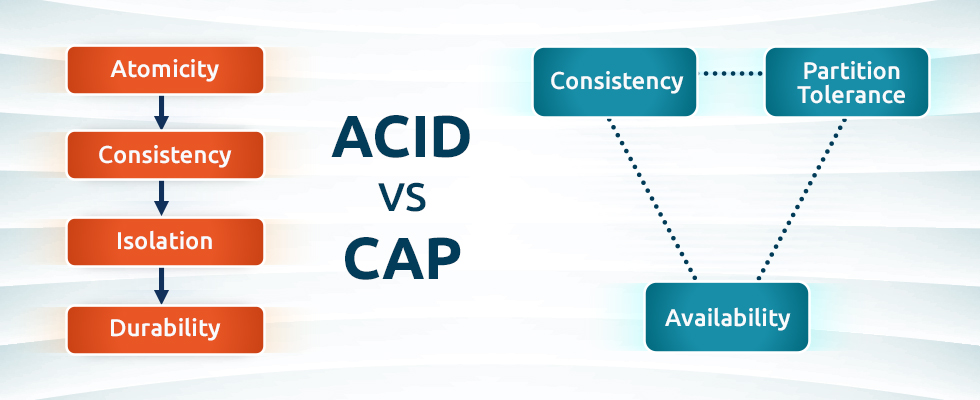
ACID vs CAP: What’s the Difference?
Acid transactions, ACID properties, and the CAP theorem are two important concepts in data management and distributed systems. It’s unfortunate…
-
10 min read
New Benchmark: Volt Very Cost-Effective at Scale on Amazon Hardware
Volt has been involved with the Yahoo! Cloud Serving Benchmark (YCSB) for some time. Every now and then we re-run the benchmark…
-
10 min read
Why Volt is the OLTP Data Platform of Choice
A lot of companies use Volt Active Data for classic Online Transaction Processing (OLTP), but why would you pick Volt…
-
10 min read
Volt Achieves 4.1 Million TPS on Supermicro Edge Hardware
We’re excited to announce very strong results from benchmarking Volt Active Data on Supermicro edge hardware. Supermicro is a global technology…
-
10 min read
5 Tech Stack Mistakes Companies Need to Avoid
Here at Volt we see a lot of customers who come to us having devoted heartbreaking amounts of time, energy,…
-
10 min read
5 Things to Know About Open API Adoption
The adoption of Application Programming Interfaces (APIs), open and otherwise, has become a ‘topic du jour’. API usage continues to surge and…
-
10 min read
Volt Active Data 12.0 Now Available
We’re very excited to announce that Volt Active Data 12.0 has been released and is now available! This release is…
-
10 min read
5 Data Trends to Watch for in 2023
As 2023 gets going, most companies are still pretty obsessed with “data”—as we are. Data is “the new oil”. You…
-
10 min read
3 Ways Your Hyper-Personalization is Subtracting Value
Recently I flew from Dublin, where I live, to Volt’s new HQ outside Boston. Apart from the usual travel delays…
-

10 min read
What is Network Slicing?
Network slicing is the process of dividing physical networks into several smaller virtual networks that can be configured to support…








Let’s Talk
Volt is the real-time decisioning layer for mission-critical systems, ensuring decisions are made and enforced immediately against accurate state, even under sustained load.
If your system cannot tolerate delayed enforcement, inconsistent behavior, or reconciliation after the fact, let’s start a conversation about whether a dedicated decisioning layer makes sense for your architecture.