AI investment in telco is accelerating. The gap between what AI detects and what the network actually does is not a model problem. It is an architecture problem.
AI-native telco autonomous operations are accelerating as a strategic priority, but investment alone does not produce autonomous action. Across operators and the vendors and integrators building the platforms that power them, the same structural bottleneck keeps surfacing: AI generates insight faster than architectures can act on it.
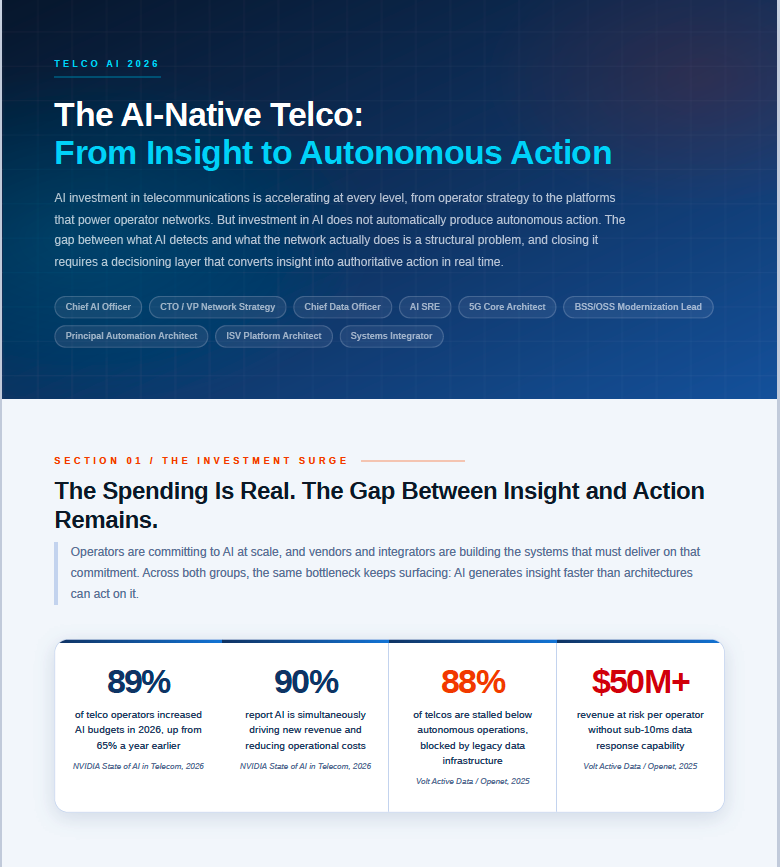
The data makes the gap concrete. 89% of telco operators increased AI budgets in 2026. 90% report AI is simultaneously driving new revenue and reducing operational costs. Yet 88% remain stalled below autonomous operations, blocked by legacy data infrastructure. The obstacle between where most operators are today and full autonomy is not model sophistication. It is the speed and determinism of the decisioning layer underneath.
The spending is real. The gap between what AI detects and what the network actually does is structural, and it compounds as 5G volumes scale and autonomous operations become the competitive baseline. Understanding the architecture required to close it starts with understanding where most operators are actually stuck and why better models alone will not get them unstuck.
Download the infographic to see the full maturity path, the data behind the gap, and the architecture required to move from AI insight to autonomous action.